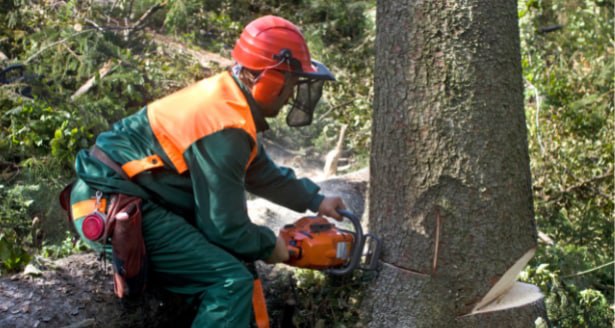
After a tree has been felled, the remaining stump and its root system can continue to take up valuable space in a garden. Stump grinding is an effective way to deal with the visible stump without having to excavate the entire root network. However, many property owners wonder what actually happens to the roots beneath the ground and whether they are removed during the process.
Understanding how stump grinding works can help homeowners make informed decisions about clearing an area and preparing it for future use. For property owners in Sittingbourne, Kent, professional stump grinding provides a practical way to remove an unwanted stump while minimising disturbance to the surrounding ground.
How Does the Stump Grinding Process Work?
Stump grinding involves using specialist machinery fitted with a rotating cutting wheel to gradually break down the remaining stump. The equipment cuts through the wood in layers, reducing it into small chips until the stump has been ground below the surrounding ground level.
The depth of grinding depends on the intended use of the area and the condition and position of the stump. In many cases, the main stump and the upper section of the root system are ground away, leaving a cavity containing wood chips and soil.
Unlike complete stump removal, grinding does not normally involve digging out every root. This makes it a less disruptive option where extensive excavation is unnecessary.
What Happens to the Main Tree Roots?
The roots closest to the stump are often the most affected during grinding. As the cutting wheel works through the stump, it can also break down larger surface roots connected to the main base.
However, roots that extend further underground are generally left in place. Their size, depth and distance from the stump mean that removing them would require additional excavation beyond the usual stump grinding process.
Once the tree has been felled and the stump is ground down, the remaining roots are no longer supported by a living tree. Over time, these roots gradually decay naturally as soil organisms and moisture break down the remaining organic material.
Do All Tree Roots Need to Be Removed?
In most situations, removing every root is unnecessary. The main objective of stump grinding is to eliminate the visible stump and reduce the upper root mass sufficiently for the area to be reused or maintained.
Leaving deeper roots underground is generally not a problem, although their suitability depends on what the property owner intends to do with the space.
For example, preparing an area for grass or general garden use may only require the stump to be ground below the surface. If the ground is intended for substantial landscaping or construction work, deeper roots may need to be considered separately.
A professional assessment can help establish the appropriate grinding depth for the intended purpose.
What Happens to the Roots After Grinding?
The remaining roots gradually decompose underground. This is a natural process influenced by factors such as root size, wood type, soil moisture and the surrounding conditions.
As the roots break down, small gaps may develop in the soil where the woody material once existed. In some cases, the ground above the former root system may settle slightly over time.
The wood chips produced during grinding can also be mixed with soil or removed, depending on the condition of the site and the intended finish. If the area is to be replanted or covered with turf, suitable topsoil may be needed to create a stable and even surface.
Can Tree Roots Continue Growing After Stump Grinding?
Once a tree has been properly felled, the stump ground down and the remaining root system separated from the living tree, most roots will gradually die and decay.
However, certain tree species can produce new shoots from remaining roots or from the stump area. This is known as suckering or regrowth and can occur even after the main trunk has been removed.
If new shoots appear, they may need further attention to prevent unwanted growth from becoming established. A tree surgeon can advise on suitable management based on the species and condition of the remaining root system.
Why Professional Stump Grinding Makes a Difference
Stump grinding requires suitable machinery, careful operation and an understanding of the ground conditions around the stump. Nearby paving, fences, garden features and underground obstacles may influence how the work is approached.
A professional tree surgeon can assess the stump, identify potential access or safety concerns and select an appropriate grinding depth. This helps achieve a more practical result while avoiding unnecessary disturbance to the surrounding area.
For homeowners in Sittingbourne, Kent, professional stump grinding can make it easier to reclaim garden space, improve the appearance of an outdoor area and prepare the ground for future landscaping.
Stump Grinding Services in Sittingbourne, Kent
Removing a tree stump does not usually mean excavating its entire root system. Stump grinding focuses on breaking down the visible stump and accessible upper roots, while deeper roots are generally left to decay naturally underground.
Sittingbourne Tree Surgery can help property owners deal with unwanted tree stumps and assess the most suitable approach for their gardens. Whether you are clearing space for new landscaping or simply want to remove an unsightly stump, professional advice can help you plan the work effectively.
Conclusion
During stump grinding, the main stump and nearby surface roots are broken down using specialist machinery, while deeper roots usually remain underground. These remaining roots gradually decay over time, although some tree species may produce new shoots that require further management.
If you have an unwanted tree stump at your property in Sittingbourne, Kent, contact Sittingbourne Tree Surgery to discuss your requirements and arrange professional stump grinding.
Call us on: 01795 718990
Click here to find out more about Sittingbourne Tree Surgery
Click here to complete our contact form and see how we can help with your tree needs.